Launching and growing a startup is hard. Resources are spread thin, and everyone’s wearing multiple hats. When you add multiple sub-brands into the mix under your primary brand, you multiply the difficulty and limit your growth.
I understand the temptation. You see large, successful companies with a portfolio of brands, so modeling your brand architecture after them seems like a bold, aspirational strategy.
But if you’re an early-stage company, you likely don’t have enough resources or runway to make that strategy work. Ask yourself: If you’re going to emulate the brand architecture of a large company, are you prepared to emulate their org chart, too?
In branding terms, the choice between a single brand or multiple brands is commonly referred to as a “branded house” vs. a “house of brands.” Here’s the difference between the two:
-
Branded House: Think of a company like Wiz Cybersecurity, where a single brand name extends through products like Wiz CNAPP, Wiz Code, Wiz Cloud, and Wiz Defend.
-
House of Brands: Think of a company like Alphabet, where Google, Android, Chrome, Gemini, etc. each have their own brand identity.
Both approaches have their place, but early-stage companies undermine their brand-recognition efforts when they choose the House of Brands approach. Every new brand name you introduce adds a layer of messaging complexity and forces you to juggle multiple brand narratives instead of reinforcing one.
Concrete reasons for sticking to one brand
If you’re not convinced that spreading yourself too thin is a bad idea when it comes to building brand recognition, consider the following:
1. SEO & customer-centricity
If customers aren’t already searching for your primary brand, expecting them to recall and seek out additional brands for your platform/products/services is an uphill battle. Meet your customers where they are by aligning with the language they use instead of expecting them to use yours.
A “Brand + Descriptor” approach is a more customer-centric solution because:
-
It aligns with how prospective buyers search for solutions to their problems
-
It helps prospective buyers quickly connect what they’re seeking to what you’re offering
By focusing on a single brand identity and using descriptive product names that tie back to that brand, you become memorable while still being findable.
2. AI Chatbot Visibility
Recent data suggests that the main factor influencing whether an AI chatbot mentions your brand is straightforward: popularity.
In a recent analysis by Kevin Indig in Growth Memo, brand search volume showed a significant correlation with the number of mentions across several leading AI chatbots.
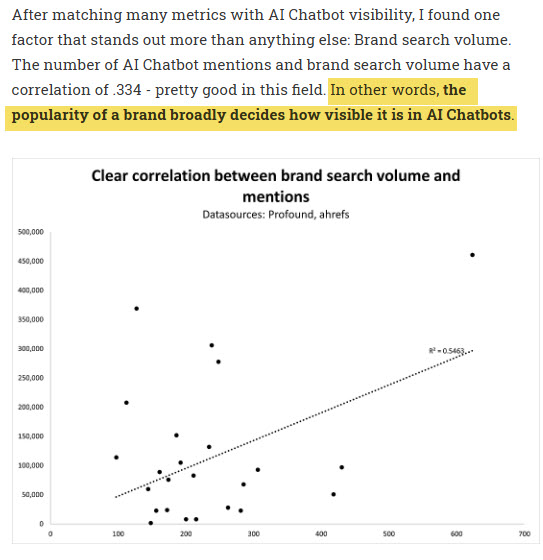
If you want to compete for chatbot visibility, your brand’s popularity is key. Comparing your own brand search volume against direct competitors is a solid predictor of how visible you’ll be in ChatGPT and other AI-driven experiences.
AI chatbots frequently experience “hallucinations” and will confidently spit out facts that are just completely wrong. Introducing multiple brands just adds to the confusion and clouds AI’s understanding of your business as an entity.
Building a strong link between your brand and your product category through consistent content publishing and digital PR is the best way to maximize brand searches and ensure that AI understands who you are.
3. Leaving money on the table
One of the most common marketing missteps is trying to compete in too many channels at once. Experimentation is essential, but too often I see marketers jump to a new channel just before making a breakthrough on a current channel. The same principle applies to branding.
If you’re not among the most recognized brands in your category, then stay focused on getting there before diverting resources to launching a new brand.
By not focusing on the opportunity that’s already in front of you, you’re potentially leaving money on the table. Focus, scale, and cement your brand’s place in the market before you consider branching out.
A helpful rule of thumb
Nimmy Reichenberg, a 4x CMO and former Head of Security Operations Marketing at Google, offers this excellent (and humorous) rule-of-thumb:
One brand (or less) for every $100M in revenue.
According to Notion Capital Managers, only about 3% of SaaS companies will reach that milestone, so if you’re reading this, you should probably stick to one brand, a.k.a. the Branded House approach.
Example 1: Wiz
Wiz leads with its brand. Products and solutions follow the “Wiz + Descriptor” format. It’s logical, customer-centric, and memorable.
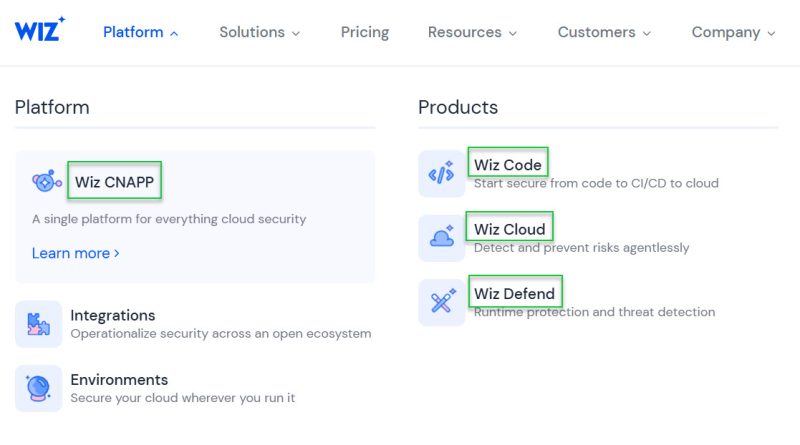
I also love the “Integrations” link in the lower-left side of the Platform navigation, which leads to a well-executed programmatic SEO implementation. I’ll save that for another post.
While we’re looking at the Wiz navigation, let’s hop over to the Solutions area. Here they list solutions to specific use cases (ICP-specific problems).
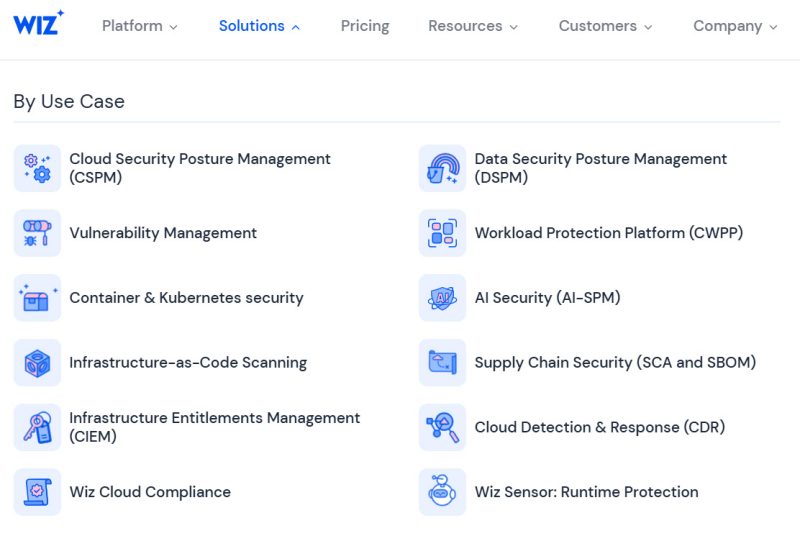
This Platform—>Products / Solutions—>Use Cases approach is a textbook example of the way most B2B technology and SaaS companies should organize their website navigation. While I’m a big fan of innovation, I like to follow convention when it comes to website navigation.
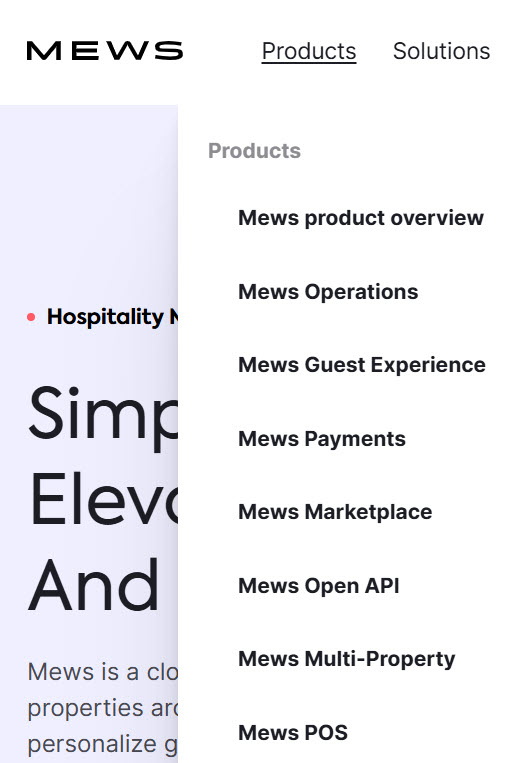
Example 2: Mews
Mews is another company that maintains a clear, focused brand architecture despite moving beyond the $100M revenue milestone several years ago.
Making the shift
If you already have multiple product names, consider consolidating them. Take a look in Google Search Console to see if anyone is searching for your sub-brands (or your primary brand for that matter).
If no one is searching for those sub-brands in the first place, they probably won’t be missed. Consider merging them under a single brand with a clear naming convention tied to your primary brand.
Brand awareness is a hard-fought game, especially in the early stages. Don’t fragment your precious resources by attempting to build brand recognition for multiple brands at once. Save the multi-brand strategy for when you’re somewhere north of $100M ARR. Until then, one brand is simpler, clearer, and far more effective.